
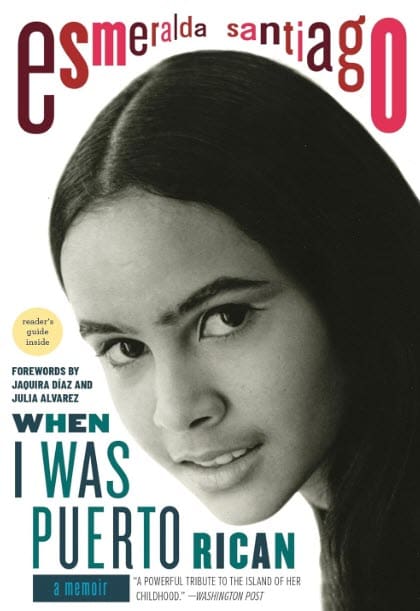
Today, we explore a memoir rich with culture, language, and sensory detail—When I Was Puerto Rican by Esmeralda Santiago.
It tells of her childhood in rural Puerto Rico, filled with love and hardship, and her move to Brooklyn at thirteen, where she struggled to adapt while holding on to her Puerto Rican identity.
Santiago’s lyrical writing shines in her prologue, “How to Eat a Guava,” where this fruit awakens vivid memories of home. Her book teaches us much about description, family, language, and belonging.
Have you read When I Was Puerto Rican? How do you feel about writing description? Have you written stories that incorporated a sense of otherness?
What about guavas? Have you eaten them? If you read Santiago’s prologue on “How to Eat a Guava,” does it line up with your experience?

But if you’re a guava-eating, writer of lyrical description or not, always remember, the only way to do this wrong is to not do it at all!
There are still two open spots for writers on the Writing the Waves cruise.
Check out the cruise page for all the details.
I’ve eaten guava before. Even grew a tree in the back of my old house. I like them. Her description is spot on. I would have also added a smell to guava. It is not very pleasant, especially when you leave them to ripen for a few days.
Thanks for this wonderful reminder, Patricia. I remember when our writing class studied from this book. I flagged it. Such a great description. Ever since I associate guava eating with this book.
I enjoyed this episode because it got me thinking about all the times I, or others I know, were in a situation of feeling like the “other” than those around them. Be it a new neighborhood, a new school, a new culture, a new job, there are many ways we social animals can feel about such impactful experiences. Whether or not the author chooses to describe them at length or not, is up to the author’s style and comfort. Getting the point of the story across to the reader is the most important task. Deciding on the point to make… Read more »