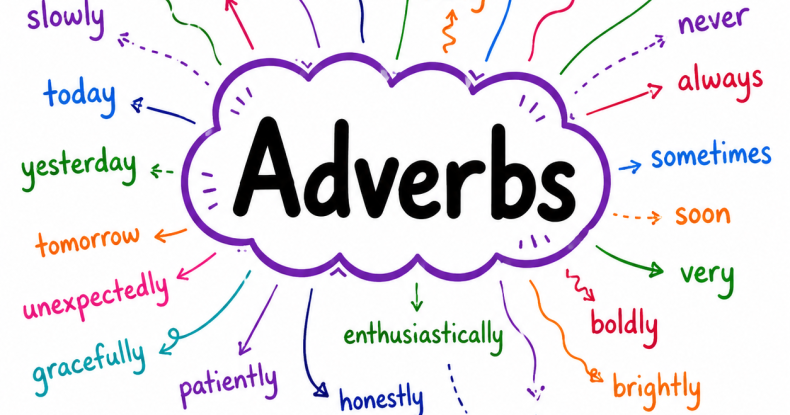

 In today’s vlog, we look at a part of speech that is often overused, and when that happens, it weakens our stories.
Which one of these sentences sounds better to you?
He thickly spread butter on his biscuit.
He slathered butter on his biscuit.
You probably picked the second version of that sentence. Why?
Adverbs, when used in moderation and at the proper times, can add to your writing, but before you reach for that adverb,make sure you are using the strongest verb possible.
Tell us about your use of adverbs in the comments section below.
But if you use or avoid adverbs, always remember: The only way to do this wrong is to not do it at all!
This is more support, if we needed it, for using strong verbs. Colorful phrases, such as Connie’s “causing Beth to eat the front seat”, add punch and linger in the reader’s mind. Great lesson, Patricia!
When writing a first draft, I use more adverbs than I like. I believe it is more fun and descriptive to write a sentence with strong verbs, and eliminating the adverbs forces me to focus on the sentence itself and play with different ways to write it. I have a method. I have one tool that finds LY words for me but, I most often do a find for LY in word, and then another one for ING words. It isn’t always straightforward. Sometimes an LY word is better. I just checked a very long first draft 42,786 words. I… Read more »
Instead of…The thin taxi driver suddenly braked, causing Beth, his passenger, a blonde haired, blued-eyed woman, to rapidly react.
Try…The cabbie slammed on his brakes causing Beth to eat the front seat.
I remember what adverbs are by the word itself…adds to verbs.
Thanks for all your advice, Patricia. I always look forward to Thursday mornings and am happy you are back and well.
I “adore” this advice! As our car hums through the Ozark mountains at the break of dawn, a red sky warns of possible storms ahead.
Very good, Kit.