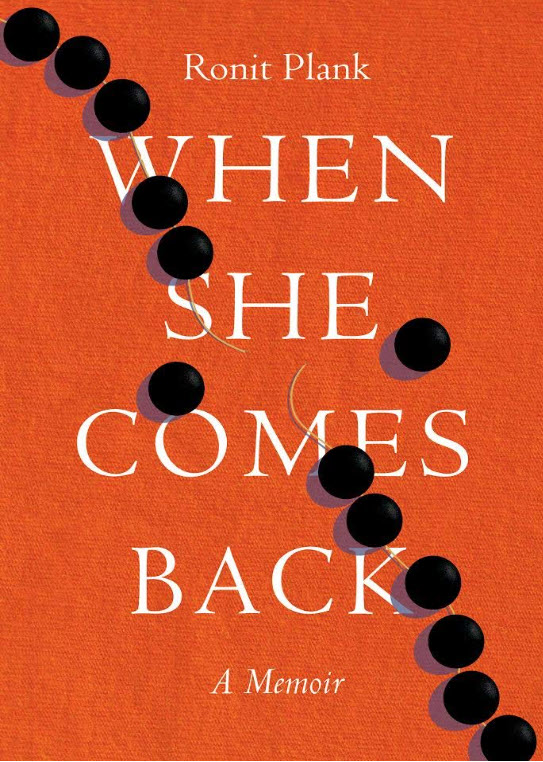
In this month’s book recommendation, I discuss When She Comes Home by Ronit Plank.
The memoir explores her childhood after her mother leaves to follow a cult leader, thereby creating years of uncertainty, feelings of abandonment, and longing for belonging.
Plank’s coming-of-age memoir helps us learn what goes into making a memoir memorable beyond a compelling story. She creates scenes and incorporates fragmented memories to shape her story.
When writing any story, knowing the question(s) it answers helps us stay focused, decide what belongs on the page and what doesn’t, and creates a stronger narrative.
If you’d like to learn more about When She Comes Back, listen to Plank being interviewed on her podcast. It’s episode #243, Jill Christman Interviews Ronit Plank.
Have you read When She Comes Back by Ronit Plank? If so, what did you think? If not, does it sound like a memoir you’d like to read?
Before you write, do you think about the question or questions your story answers? If so, how does that help your writing? If not, is this a technique you might try with your next piece?
Until next time, happy writing, everyone.
I am also taking a course in copywriting which includes the technique of anticipating the readers questions then choosing the title and story copy around that focus. I’m anxious to try it. Hey Terry, I want to know what was unique about living in England? Did you eat different foods? Did you pick up an accent? How did you answer friends questions about that time in your life? Do you have friends there you still keep in touch with? Sometimes I can ask a buddy what their questions might be, around one part of my life, and their resulting questions… Read more »
I listened to part of the podcast. This hits close to home for me because, as a child, I was kept in hiding in my mother’s cult church. I am an only child, and I learned to become strong in myself. At seven, I was called to the leader, where she told me I was the chosen one to marry her son, Bob, when I turned eighteen. With her keeping me away from things she called worldly, I was safer than most of the other members, as she groomed me to marry her son. I observed truths and faults by… Read more »
My forays into memoir have mostly been prompt driven and therefore lack a central question. The only attempt I’ve made to write a coherent memoir, the story of the three and a half years my family lived in England, has been difficult to work on, partly because of the distance in time but also because I don’t have any burning reason to write it. Nothing momentous happened. I was blessed to have a loving family with no major upsets. There’s nothing in those years that would tempt anyone who doesn’t know me to read about them. One thing that seems… Read more »
I often feel similarly, Terry. Read my post above.
I don’t think I would read this type of memoir. I find it difficult to read about the mental abuse a child goes through when a parent chooses to leave them.
That was my first reaction too, Judy. But then I remembered how much I got out of our study of the memoir Educated. I probably would not have read the story if a drug addict on my own. Now I’m so glad I did read it. I learned a lot about writing deep.
I listened to some of the podcast, and when the author narrated the prologue, I didn’t want her to stop. So, I saw the book is available on HOOPLA at my library on audio. Now, it’s on my to be read list.
That’s a good idea for a writing or editing technique. What questions does my story answer? I will try this on a story I’ve already written.
I usually think about the questions before writing. It helps to define clarity in thought and how to best express your message. Readers who read closely usually come up with unanswered questions too.