I thought it might be helpful for you to hear more about micro-memoir from authors who do it best.
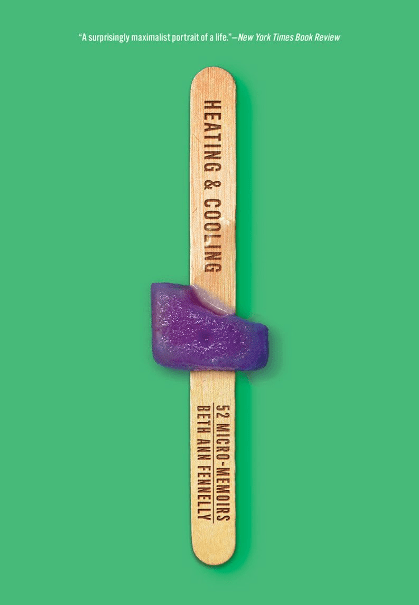
From Beth Ann Fennelly, author of Heating & Cooling: 52 Micro-Memoirs:
“A true hybrid, the micro-memoir strives to combine the extreme abbreviation of poetry, the narrative tension of fiction, and the truth-telling of creative nonfiction.
“At its most basic, a micro-memoir is written in sentences, drawn from personal experience, and strives to create a world in as few words as possible.”
From John Dufresne, novelist and short story writer, author of Flash!: Writing the Very Short Story:
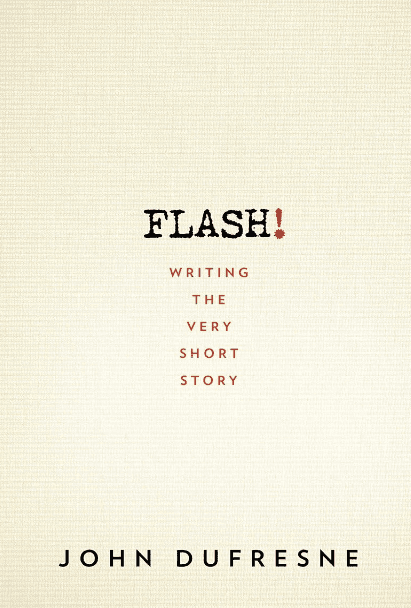
“[It is] distilled and refined, concentrated, layered, coherent, textured, stimulating, and resonant…It’s short but not shallow; it’s a reduced form used to represent a larger, more complex story; it’s pithy and cogent, brief and pointed, and like the gist of a recollected conversation, it offers the essential truth, if not all the inessential facts.”
“…the art of a few words and many suggestions.”
“…it doesn’t explain; it only indicates.”
“The reader supplies the context, which, if it were present, would make the short story a long story.”
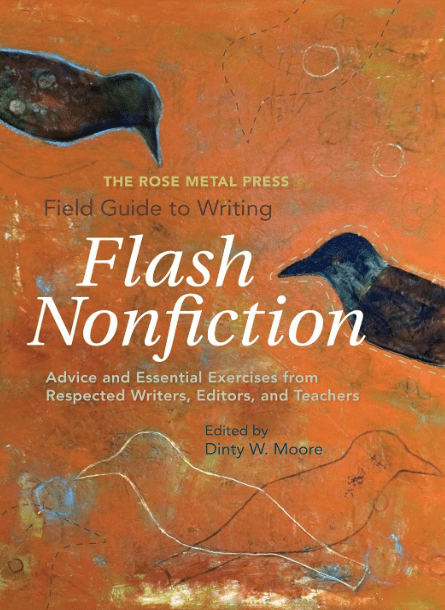
From Dinty W. Moore, editor of Field Guide to Writing Flash Nonfiction:
“Though trying to pin down any art form too strictly is ultimately a fruitless exercise, I’ve come up with what I think is an apt metaphor: Imagine there is a fire burning deep in the forest. In an essay of conventional length, the reader begins at the forest’s edge, and is taken on a hike, perhaps a meandering stroll, into those woods, in search of the fire. The further in the reader goes, with each page that turns, the more the reader begins to sense smoke in the air, or maybe heat, or just an awareness that something ahead is smoldering.
“In a very brief essay, however, the reader is not a hiker but a smoke jumper, one of those brave firefighters who jump out of planes and land 30 yards from where the forest fire is burning. The writer starts the reader right at that spot, at the edge of the fire, or as close as one can get without touching the actual flame. There is no time to walk in.
“The brief essay, in other words, needs to be hot from the first sentence, and the heat must remain the entire time.”
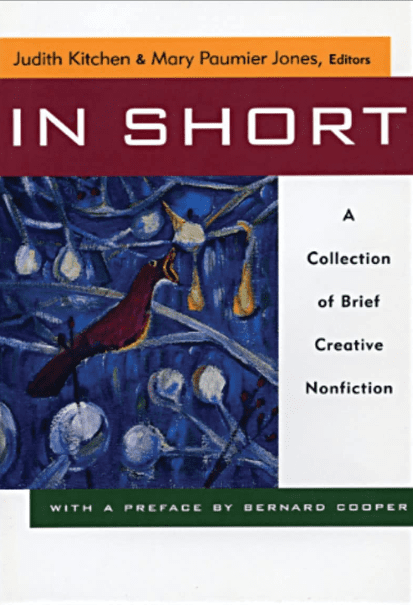
From Judith Kitchen and Mary Paumier Jones, co-editors of In Short:
“A Short, as we see it now, can be an essay, or an anecdote, or a description. It can be a journal entry, or a commentary, or an inventive foray into language.
“Whatever it is, the writer has taken the time to make it short, though shortness alone is not enough. These pieces are also deep–a whole world created with just a few strokes.
“Length, depth, and wholeness, then, are the characteristics of Shorts.”
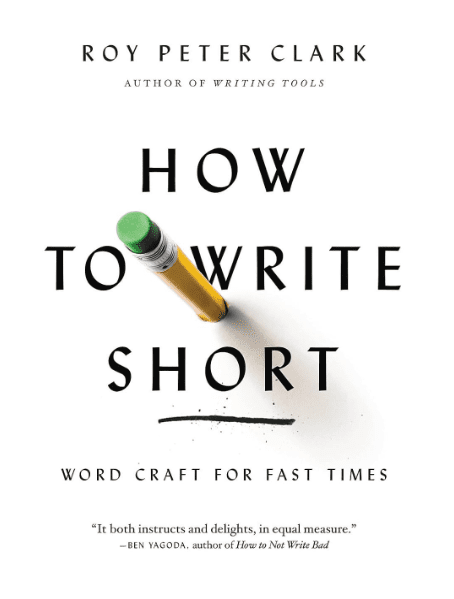
From Roy Peter Clark, author of How to Write Short:
“From the analysis of these rational short forms, writers and readers can learn the essential elements of good short writing, everything from word order, ellipses, and slang to levels of formality and informality, details and parallel structures.
“When it comes to the how of short writing, you will find three paths: learning short writing through reading; practicing the best short writing moves; and cutting longer texts down to size. If you want to write short, you must read short.”
Attahced is my micro-memoir for week one.
My six-word micro memoir is: Shoreline cruise
Cabin view
Covid stung
I am looking forward to writing short.